


 Home
Home Electrical Engineering
 Table of Contents
 Profiles
 Q & A
Q & A
Electrical Engineering
Study and Learn Electrical and Electronic Engineering with useful and understandable definitions, examples, and projects.
Read More
Ask Electrical Engineer
Want to ask a question, or have stuck in a problem, ask electrical engineer with every detail you need in the related category.
Ask a Question
Scientests and Physicist
Some legends have contributed their lives to understand the unseen knowledge of natural world and make it clear crystal for the public.
View Profiles
Basic Electrical Engineering
Electrical Engineering
Completed
100%
Electrical Circuit Analysis
Electrical Engineering
Completed
100%
Introduction to Computer
Electrical Engineering
Completed
100%
Calculus and Analytical Geometry
Electrical Engineering
Next
0%
RECENT UPLOADS

Posted in Feb 2026
Introduction Limits at infinity describe the end behavior of functions as the variable grows very large or very small. Instead of asking what happens near a specific point, we ask: What happens when $x$ approaches infinity? This concept is essential in calculus because many real-world systems depend on long-term behavior. For example, engineers analyze how systems behave over time, physicists study motion approaching steady states, and economists examine long-term trends. Mathematically, limits at infinity help us understand whether a function settles toward a constant value, grows without bound, or oscillates indefinitely. Basic Concept of Limits at Infinity A limit at . . .
Posted in Feb 2026
Introduction Limit laws form the foundation of calculus and allow us to evaluate limits quickly and systematically. Instead of solving every limit from first principles, these laws provide a set of rules that simplify even complex expressions into manageable steps. In calculus, we often encounter expressions involving sums, products, powers, and quotients of functions. Without limit laws, each of these would require lengthy calculations. However, with these rules, we can directly evaluate limits using simple substitution in many cases. The concept of limits was formalized in the 17th century by mathematicians like Isaac Newton and Gottfried Wilhelm Leibniz, who laid . . .
Posted in Feb 2026
Introduction The concept of limits is the foundation of calculus. It helps us understand how functions behave when the input values get very close to a particular number. In many mathematical problems, we are not only interested in the value of a function at a specific point, but also in how the function behaves near that point. This idea leads to the concept of limits. A limit describes the value that a function approaches as the input approaches a certain number. Mathematically, this is written as $$ \lim_{x \to a} f(x) = L $$ This means that as $x$ gets . . .

Posted in Feb 2026
Introduction Limits and continuity are among the most fundamental ideas in calculus. They form the mathematical foundation for studying derivatives, integrals, and many advanced mathematical concepts. When mathematicians study functions, they often want to understand how a function behaves when the input value approaches a particular number. Instead of evaluating the function exactly at that point, calculus often studies the behavior of the function very close to that point. This concept leads to the idea of a limit. A limit describes the value that a function approaches as the input variable approaches a certain number. Mathematically this is written as . . .

Posted in Feb 2026
Introduction In mathematics and calculus, functions describe relationships between variables. A function takes an input value, performs a mathematical operation, and produces an output. However, many situations require reversing this process. Instead of finding the output from an input, we may want to determine the original input that produced a specific output. This reverse process is described using inverse functions. An inverse function reverses the operation performed by the original function. If a function $f(x)$ converts an input $x$ into an output $y$, then its inverse function converts the value $y$ back into $x$. The inverse function of $f$ is . . .
TOP VIEWED PAGES

Last 28 days
34k
Views
Updated in Jan 2026
Mesh Analysis (or Mesh Current Method) is a fundamental technique in electrical circuit analysis used to determine the currents in the loops (meshes) of a circuit. When circuits include current sources, the method has special considerations. This article explains the concept step by step.
What is Mesh Analysis?
Mesh analysis is based on Kirchhoff's Voltage Law (KVL):
The algebraic sum of voltages around any closed loop in a circuit is zero.
In mesh analysis:
Assign a loop current to each independent mesh.
Apply KVL around each loop.
Solve the resulting simultaneous equations to find the loop currents.
Once loop currents are known, branch currents and voltages across elements
...
Last 28 days
30.3k
Views
Updated in Jan 2026
Electrical Engineering is one of the oldest and most dynamic fields of engineering, playing a crucial role in shaping the modern world. It involves the study, design, and application of electrical systems, electronics, and electromagnetism. From powering homes and industries to enabling advanced communication networks, electrical engineering touches almost every aspect of daily life.
Over time, the field has evolved into several specialized branches, each focusing on a specific area of technology, such as power systems, electronics, telecommunications, and control systems. Understanding these branches helps students, professionals, and enthusiasts to choose their area of interest and contribute to technological
...

Last 28 days
18k
Views
Updated in Jan 2026
What Is Magnetizing Force?
Magnetizing force (symbol H) â also called magnetic field intensity â is a measure of the strength of the magnetic field created by a currentâcarrying conductor or coil. It describes how strongly a magnetic field can magnetize a material or establish magnetic flux in a magnetic circuit. The greater the magnetizing force, the stronger the resulting magnetic field in the material.
In simple terms, H represents the magnetic âeffortâ produced by electric current to set up a magnetic field along a path.
Basic Definition & Formula
The magnetizing force is defined as the magnetomotive force (MMF) per unit length of
...

Last 28 days
18k
Views
Updated in Jan 2026
Introduction
Ladder networks are one of the fundamental circuit configurations used in electrical and electronics engineering. These networks are called ladder networks because their circuit structure resembles a physical ladder, where series elements form the vertical sides and shunt elements form the horizontal steps. Ladder networks are widely applied in filter design, impedance matching, digital-to-analog converters, and transmission systems due to their simplicity, modular nature, and predictable behavior.
What Is a Ladder Network?
A ladder network is an electrical circuit made by arranging components such as resistors, capacitors, and inductors in a repeating seriesâshunt pattern. In this configuration, one component is connected in
...

Last 28 days
16.8k
Views
Updated in Jan 2026
Introduction
In todayâs digital era, computers have become an indispensable part of government operations across the world. Governments are responsible for managing vast populations, complex administrative systems, national resources, and public services. Performing these tasks manually is slow, costly, and prone to errors. Computers have transformed traditional government systems into efficient, transparent, and citizen-friendly digital platforms. From policy planning to public service delivery, computers now form the backbone of modern governance.
Administrative Efficiency and Digital Record Management
Government departments maintain enormous amounts of data related to citizens, land, finance, employees, and legal matters. Computers help in:
Storing large volumes of data in digital databases
Fast
...
TOP VIEWED PROFILES
All time
20.4k
Views
Updated in 2023
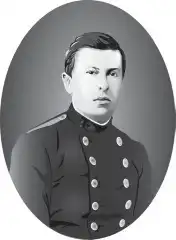
Leon Charles Thevenin was a French telegraph engineer who worked on Ohm's law and extended it to the analysis of complicated electrical networks. He is remembered today almost entirely for one small piece of work. His theorem, published in 1883, was based on his study of Kirchhoff's Laws and is found in every basic textbook on electrical circuits. It has made his name familiar to every student of electrical circuits and to every electrical and electronics engineer.
All time
15.6k
Views
Updated in 2023
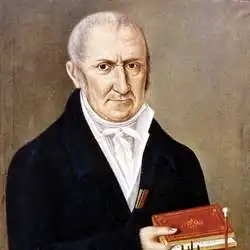
Count Alessandro Volta was a Italian scientist who contributed in the development of an electrical energy source from chemical action in 1800.
For the first time, electrical energy was available on a continuous basis and could be used for practical purposes. He also developed the first condenser known today as the capacitor. He has invited to Paris to demonstrate the voltaic cell to Napoleon. The International Electrical Congress meeting in Paris in 1881 honored his efforts by choosing the volt as the unit of measure for electromotive force.
For the first time, electrical energy was available on a continuous basis and could be used for practical purposes. He also developed the first condenser known today as the capacitor. He has invited to Paris to demonstrate the voltaic cell to Napoleon. The International Electrical Congress meeting in Paris in 1881 honored his efforts by choosing the volt as the unit of measure for electromotive force.
All time
14.9k
Views
Updated in 2023
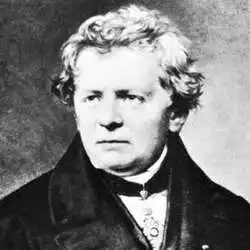
Georg Simon Ohm (1787-1854), a German physicist, in 1826 experimentally determined the most basic law relating voltage and current for a resistor. Ohm's work was
initially denied by critics.
Born of humble beginnings in Erlangen, Bavaria, Ohm threw himself into electrical research. His efforts resulted in his famous law. He was awarded the Copley Medal in 1841 by the Royal Society of London. In 1849, he was given the Professor of Physics chair by the University of Munich. To honor him, the unit of resistance was named the ohm.
Born of humble beginnings in Erlangen, Bavaria, Ohm threw himself into electrical research. His efforts resulted in his famous law. He was awarded the Copley Medal in 1841 by the Royal Society of London. In 1849, he was given the Professor of Physics chair by the University of Munich. To honor him, the unit of resistance was named the ohm.
All time
13.6k
Views
Updated in 2023
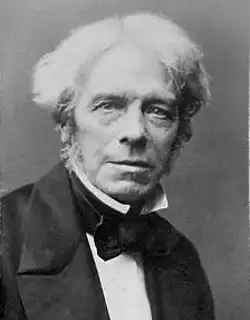
English scientist, physicist and chemist Michael Faraday is known for his many experiments that contributed greatly to the understanding of electromagnetism. Faraday, who became one of the greatest scientists of the 19th century, began his career as a chemist. His major contribution, however, was in the field of electricity and magnetism . He was the first to produce an electric current from a magnetic field, invented the first electric motor and dynamo.
All time
13.3k
Views
Updated in 2023
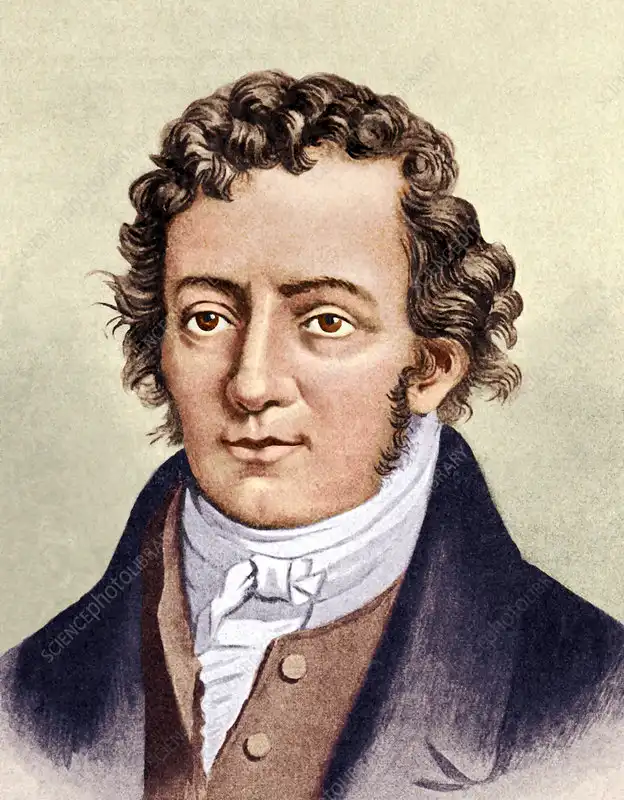
Andre-Marie Ampere was a French physicist and mathematician who was one of the founders of the science of classical electromagnetism. His name endures in everyday life in
the ampere, the unit for measuring electric current.
On September 18, 1820, introduced a new field of study, electrodynamics, devoted to the effect of electricity in motion, including the interaction between currents in adjoining conductors and the interplay of the surrounding magnetic fields. Constructed the first solenoid and demonstrated how it could behave like a magnet (the first electromagnet). Suggested the name galvanometer for an instrument designed to measure current levels.
On September 18, 1820, introduced a new field of study, electrodynamics, devoted to the effect of electricity in motion, including the interaction between currents in adjoining conductors and the interplay of the surrounding magnetic fields. Constructed the first solenoid and demonstrated how it could behave like a magnet (the first electromagnet). Suggested the name galvanometer for an instrument designed to measure current levels.
TOP VIEWED QUESTIONS

2021-07-24 15:44:03

2021-10-03 05:12:21
 Youtube
 Facebook
Be the first to comment here!
Do you want to say or ask something?